Emergency Dentist Advice for Handling Trauma During Family Vacations
Family vacations have a way of compressing a year’s worth of activity into a few intense days. Children run harder, adults relax their usual guard, meals happen off schedule, and everyone spends more time on unfamiliar surfaces, from slick pool decks to rocky hiking trails. That is exactly why dental injuries seem to appear at the worst possible moments, often far from the home dentist who knows your family.
An Emergency Dentist sees a particular pattern with travel injuries. A child slips beside a hotel pool and chips an incisor. A teenager catches an elbow during a beach volleyball game and loosens a front tooth. A parent bites down on an unpopped popcorn kernel at the movies and cracks a molar already weakened by an old filling. These situations feel chaotic, but the first response often matters more than people realize. Calm, practical action can reduce pain, improve the odds of saving a tooth, and help you avoid turning a manageable injury into a more complicated one.
The good news is that most dental trauma falls into a handful of recognizable categories. If you understand what to look for, what to do immediately, and when to stop improvising and get professional help, you can navigate the situation with far more confidence.
Why vacation dental trauma feels more urgent
At home, a dental emergency is disruptive. On vacation, it can feel destabilizing. You may not know where the nearest clinic is. You may be driving through an unfamiliar area with spotty cell service. It may be after hours. If the injured person is a child, fear often escalates faster than the injury itself. Blood in the mouth looks dramatic, even when the actual wound is relatively small.
Travel also complicates timing. Some dental injuries are time-sensitive in a very literal sense. A permanent tooth that has been knocked out has the best chance of survival when it is replanted quickly, ideally within 30 minutes, although meaningful attempts are still worth making after that. A crack that seems tolerable at breakfast can become severe pain by dinner once inflammation builds or the pulp becomes exposed. A cut lip may hide a broken tooth fragment that later irritates the tongue or cheek.
In practice, I have found that families lose the most time in the first 20 minutes because they are trying to decide whether the injury is “bad enough.” That hesitation is understandable, but a few simple checks can move you from panic to action.
The first ten minutes matter most
When someone injures a tooth on vacation, your priorities are simple: control bleeding, protect the tooth and surrounding tissue, reduce swelling, and determine whether an Emergency Dentist or medical emergency service is needed right away.
Use this sequence:
- Have the person sit upright and stay still. Apply clean gauze or a clean cloth to any bleeding area with gentle pressure.
- Rinse the mouth lightly with water to clear blood and help you see whether the problem is a chipped tooth, a loose tooth, a missing tooth, or a soft tissue cut.
- If there is swelling, use a cold compress on the outside of the face for short intervals, about 10 minutes on and 10 minutes off.
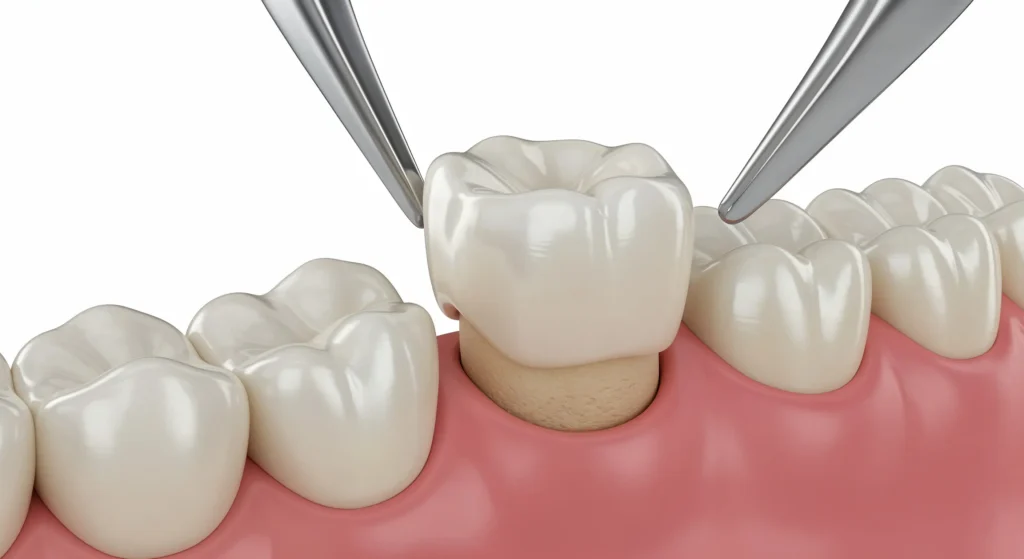
- If a permanent tooth has been knocked out, pick it up only by the crown, not the root. If it is dirty, rinse it briefly with milk or saline if available, or clean water for a second or two, then try to place it back in the socket or store it in milk while you seek urgent care.
- Call an Emergency Dentist immediately if a tooth is loose, displaced, fractured deeply, or fully avulsed, or if pain is severe, bleeding will not stop, or the person cannot close the mouth normally.
Those steps are straightforward, but execution is where people often make mistakes. The most common one is scrubbing a knocked-out tooth. Roots have delicate periodontal ligament cells on the surface, and vigorous cleaning damages them. Another frequent mistake is storing the tooth in a dry tissue. Teeth do not do well when they dry out.
Not every broken tooth is the same injury
A chipped edge on a front tooth and a split molar are both “broken teeth” in casual speech, yet the urgency and treatment path can be quite different.
A small chip in enamel may feel rough but not terribly painful. On vacation, families often think they can safely ignore it until they get home. Sometimes they can, especially if the person has no sensitivity to air, cold, or biting pressure. Even then, cover any sharp edge with orthodontic wax if you have it, or sugar-free chewing gum in a pinch, to protect the lip or tongue. Keep the area clean and avoid biting with that tooth.
A larger fracture is different. If the broken area looks yellow, that may be dentin. If it looks pink or there is pinpoint bleeding from the center of the tooth, the pulp may be involved. Those cases need prompt professional attention. The longer the pulp is exposed, the higher the risk of severe pain and infection, and the treatment may become more invasive.
Molars create a separate challenge because their fractures are not always obvious. A parent may describe “sharp pain when chewing” after biting something hard at a resort restaurant. If the tooth hurts only on release, or if pain spikes with hot or cold, that can suggest a crack. Cracked teeth are not always visible without magnification and radiographs, so a vacation urgent care clinic that is not dental may not be able to help much beyond pain advice. This is where calling an Emergency Dentist directly saves time.
A knocked-out tooth is the true time-sensitive emergency
Among dental vacation injuries, a permanent tooth that has come all the way out is the one event where minutes genuinely matter. This does not apply to baby teeth. A knocked-out baby tooth should not be replanted because doing so can damage the developing permanent tooth underneath.
If a permanent tooth has been avulsed, the ideal response is to reinsert it into the socket immediately if the person is cooperative and conscious, and if the tooth is intact enough to handle safely. It sounds intimidating, but in real life the socket often guides the tooth into position more naturally than people expect. Once it is seated, the patient can bite gently on gauze to hold it stable while you head to care.
If you cannot reinsert it, store it in cold milk. A tooth preservation kit is even better, but few families carry one. Saline works. The inside of the cheek is sometimes mentioned, but I am cautious with children because of the risk of swallowing it. Plain water is better than dry storage, but it is not the preferred medium for long.
The age of the patient matters. A seven-year-old may have newly erupted permanent incisors, while a five-year-old almost certainly has primary teeth in front. If you are not sure whether the tooth is baby or permanent, assume it could be permanent and get guidance quickly. Sending a photo to the dental office can help the team advise you before you arrive.
Loose teeth, pushed-in teeth, and teeth that look “crooked”
Not all traumatic injuries involve obvious fractures. Some teeth are loosened in the socket, pushed backward or forward, or intruded upward into the gums after an impact. These injuries can be easy to underestimate because the tooth is still present.
A loose permanent tooth deserves urgent evaluation. The tooth may need repositioning and splinting. A tooth that has shifted even slightly can affect the bite, strain the ligament, and jeopardize blood supply. If the patient says, “It feels taller than the others,” pay attention. That sensation often indicates displacement.
A tooth pushed inward after a fall is particularly concerning. Parents sometimes think the tooth “went up into the gum.” In younger children with baby teeth, that may indeed be intrusion. Management varies depending on whether it is a primary or permanent tooth, how far it moved, and the child’s age. This is not a wait-and-see situation without at least a prompt professional opinion.
One detail worth noting is numbness. If the lip, chin, or cheek feels numb after trauma, that raises concern for a deeper injury, and it may warrant medical imaging in addition to dental evaluation.
Cuts, swelling, and jaw injuries can change the picture
Families tend to focus on the tooth itself, but the surrounding tissues often deserve equal attention. A lip can split against the edge of a front tooth. The tongue can sustain a deep laceration during a fall. The jaw can bruise, strain, or fracture from a direct blow.
If a laceration continues bleeding despite steady pressure, if the wound is deep or gaping, or if there is debris embedded in the tissue, seek medical care promptly. Dental offices manage many soft tissue injuries, but facial wounds sometimes need hospital or urgent care support, especially if suturing is required or there is concern about facial bones.
Jaw injuries need a higher index of suspicion than most people realize. If the person cannot open normally, cannot bring the teeth together the way they did before, has pain just in front of the ear, or hears grinding after an impact, that can suggest temporomandibular joint trauma or a fracture. At that point, an emergency department may be more appropriate than a dental office alone.
A practical rule is this: if airway, consciousness, severe bleeding, or suspected head injury is in play, that is no longer just a dental problem. Start with medical emergency services.
Pain control on the road
Pain from dental trauma can swing from mild annoyance to miserable throbbing in a matter of hours. Families on vacation often reach for whatever is available in a toiletry bag, which is understandable, but a little caution helps.
Ibuprofen is often useful for dental pain because it reduces inflammation as well as pain, provided the patient can take it safely and has no medical contraindications. Acetaminophen is another common option. Follow labeled dosing or the patient’s physician’s guidance, especially with children. It is surprisingly easy to make dosing errors when tired parents are working from memory in a hotel room.
One old misconception still shows up from time to time: people place aspirin directly on a painful tooth or gum. Do not do that. It can chemically burn the tissue and will not solve the underlying issue.
Cold compresses help with swelling. Soft foods help prevent further injury. A person with a cracked tooth usually does better avoiding extreme temperatures and chewing on the injured side. If there is an exposed nerve, even room-temperature air can trigger pain, so shielding the area with temporary dental material from a pharmacy can sometimes buy time until the appointment.
Finding an Emergency Dentist when you are far from home
Travelers often lose time searching broadly for “dental emergency” when they would be better served by narrowing the search. A general dentist who explicitly handles same-day trauma is often ideal, but not every office can accommodate acute injuries, especially in vacation areas during peak season.
Look for offices that mention emergency visits, trauma care, same-day appointments, or after-hours instructions. Call rather than relying only on online scheduling. A receptionist or answering service can usually tell you whether the office treats children, whether they can manage avulsed teeth, and whether radiographs are available on site. If you are staying at a hotel or resort, the front desk often has a short list of local providers who have helped guests before.
When you call, give useful details. Say the patient’s age, whether the tooth is permanent or baby if known, whether the tooth is loose, chipped, displaced, or missing, how long ago the injury occurred, and whether there is swelling or bleeding. If they ask for photos, send clear ones in good light. A sharp image of the bite from the front and side can be surprisingly informative.
If no dentist is reachable and the injury is severe, the emergency department is the fallback, especially for uncontrolled bleeding, facial trauma, suspected fracture, or combined head injury. Hospitals are not a substitute for dental treatment in every case, but they can stabilize the situation and help route you appropriately.
Children need a different kind of reassurance
Parents sometimes think they need to hide their concern, but children usually sense the tension anyway. What works better is calm, direct language. “You hurt your tooth. We’re going to rinse it, stop the bleeding, and find the dentist who can help,” is more effective than vague comfort.
A child with a mouth injury may refuse ice, spit out water, or cry too hard to cooperate. That does not mean the injury is worse. It often means the environment is overstimulating. Move to a quieter space. Sit them upright on a caregiver’s lap. Have one adult handle the soothing and another handle the practical steps. Children generally do better when a single adult gives instructions instead of three people talking at once.
One pattern I have seen repeatedly is delayed distress. A child may seem fine for 30 minutes after a fall, then suddenly become inconsolable once swelling and sensitivity set in. Families sometimes misread that as panic rather than pain. If behavior changes rapidly after a tooth injury, reassess the mouth carefully and do not assume the child is simply tired.
What to pack before the trip
Most families pack sunscreen with more discipline than they pack for oral emergencies. A small dental trauma kit takes very little space and can make an outsized difference.
Consider bringing:
- Clean gauze pads and a small roll of medical tape
- A travel-size saline rinse or sterile saline pods
- A cold pack that activates when squeezed
- Orthodontic wax or temporary dental repair material from a pharmacy
- Age-appropriate pain relievers, with dosing information readily available
If your child plays sports even casually on vacation, a mouthguard deserves a spot in the bag as well. It is especially worth it for biking, skateboarding, basketball, and any water park activity with hard surfaces nearby.
Prevention is less glamorous, but it works
The easiest dental emergency to manage is the one that never happens. Families do not need to vacation timidly, but they should be realistic about risk.
Many vacation injuries happen in transition moments rather than the activity itself. Running from the pool to the room. Jumping from a bunk bed. Carrying luggage down uneven rental steps. Riding scooters without face protection. Letting children chew ice in the car because everyone is hot and distracted. Those small lapses are what fill emergency schedules.
Pre-existing dental work matters too. A tooth with a large old filling, a recent root canal without a crown, or a temporary crown is more vulnerable during travel. If someone in the family has had intermittent tooth pain before the trip, get it checked before you leave. A tooth that is “acting up a little” at home rarely improves on vacation.
Adults are not https://maps.app.goo.gl/LyyJttsiUMY7VSfU7 exempt. I have seen more cracked molars from road-trip snacks than from contact sports. Nuts, hard candy, popcorn kernels, and even crusty artisan bread can be the final straw for a compromised tooth. Vacation eating tends to be more impulsive, and tired people bite harder than they realize.
When it is safe to wait until you get home, and when it is not
This is the judgment call families want most. Some injuries can wait a day or two with sensible precautions. Others should not.
A tiny chip with no pain, no sharp trauma to soft tissue, and no change in bite may wait until you return, provided the trip is short and the tooth is protected. Mild soreness from a bitten cheek can often be observed. A lost filling without significant pain may be temporarily managed with pharmacy repair material if you can keep the area clean and avoid chewing there.
By contrast, do not postpone care for a knocked-out permanent tooth, a loose or displaced tooth, a deep fracture, persistent bleeding, facial swelling, fever, severe pain, difficulty opening or closing, or trauma associated with a fall involving the head. Those cases can worsen quickly, and waiting can change the treatment from conservative to complex.
One more point that often gets missed: a tooth can test normal right after an injury and still develop problems later. Even after apparently successful emergency treatment, follow-up with your regular dentist is important once you are home. Traumatized teeth may darken, lose vitality, or show root changes weeks to months later. Vacation care is often the first chapter, not the entire story.
A calm response protects more than the tooth
Dental trauma during a family trip is unsettling because it interrupts the sense that vacations are supposed to be carefree. Still, the families who navigate it best are not the ones with medical training. They are the ones who stay organized. They control the scene, protect the injured area, avoid well-meaning but harmful shortcuts, and get the right professional involved quickly.
An Emergency Dentist can do a great deal for a broken, loosened, or avulsed tooth, but the care really begins where the injury happens, on the pool deck, in the rental kitchen, beside the trail, or in the back seat at a gas station stop. A few informed decisions in those first moments can preserve options, reduce pain, and make the difference between a simple repair and a lasting problem. That is advice worth carrying on every trip.
Simple Dental Vermont
Address: 8914 S Vermont Ave, Los Angeles, CA 90044
Phone number: +13239493000
FAQ About Emergency Dentist Los Angeles CA
What can the ER do for a tooth?
The emergency room can provide temporary symptom relief for a bad tooth, such as prescribing pain medicine or antibiotics, but it cannot fix the actual dental problem.
What is the 3-3-3 rule for tooth infection?
The 3-3-3 rule for a toothache or infection typically means taking three 200 mg ibuprofen tablets (600 mg total) three times a day for no more than three days to control pain and swelling while waiting to see a dentist.
What do you do if you have a dental emergency but no dentist?
If you have a dental emergency and no regular dentist, you should search for an urgent care dental clinic, call local walk-in dental offices, or go to a hospital emergency room if you have severe bleeding, swelling, or trouble breathing.